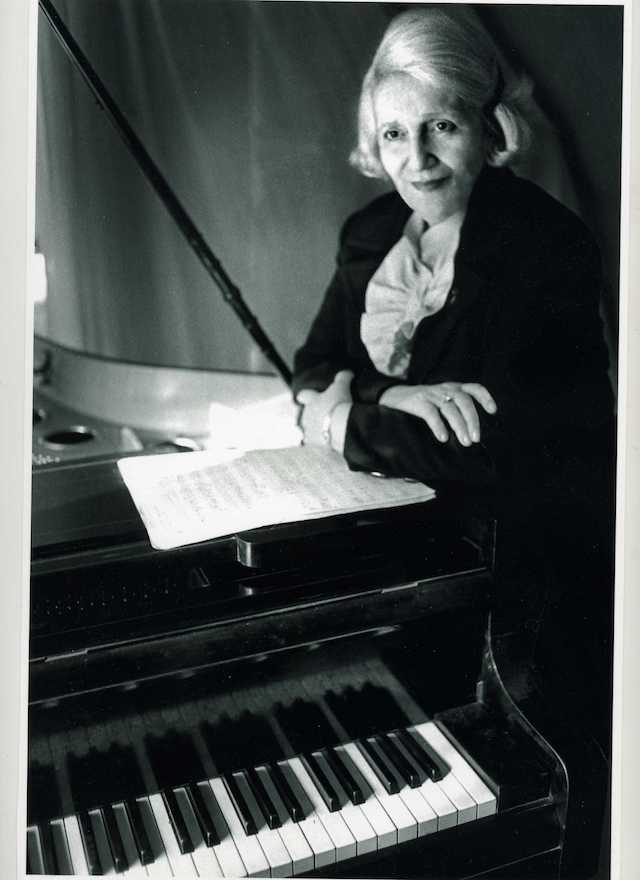
Avniye Nazife Aral Güran (1921–1993) was a powerhouse of creativity, yet her name is still far too little known outside of Turkey. Born in Vienna to a Turkish diplomat father, Güran’s life was truly international. She studied in Istanbul, Berlin, Cologne, and Ankara, blending European classical traditions with the cultural richness of her homeland.
Güran composed over 1,000 works across nearly every genre: piano music, lieder, orchestral scores, children’s songs, marches, and dramatic ballades. Her output shows a composer who was tireless, imaginative, and determined to bring Turkish culture into dialogue with Western forms. Three Concert Études (1979) showcase her modernist side—virtuosic, structured, and demanding.
At the same time, shorter pieces such as Kennedy Nocturne, İlkbahar (“Spring”), and Boğaziçinde İkebana reveal her gift for intimacy and atmosphere. These miniatures sparkle with character and are perfect for pianists looking to bring something new and meaningful to the recital stage.
Güran’s influence extended beyond her scores. In Diyarbakır, she founded the Philharmonic Society and a children’s choir, fostering a vibrant community of music-making. She even made sure music left a permanent mark on the cityscape by naming a street “Bestekâr Sokak”—“Composer Street.”
Nazife Aral Güran reminds us that history is full of voices we’ve overlooked. Her piano works are bold yet lyrical, rooted in tradition yet strikingly original. For pianists, they offer both technical challenge and expressive depth. For listeners, they open the door to a vibrant and inspiring musical world.
Comments
Post a Comment