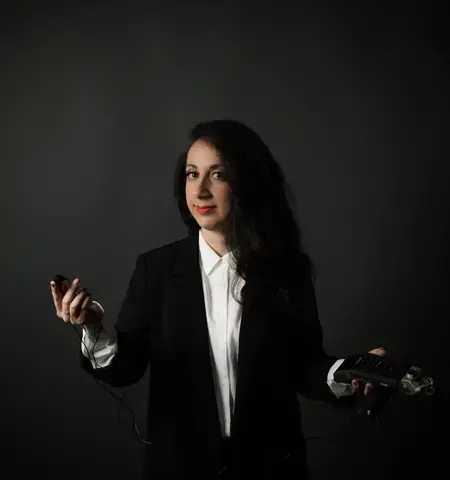
Mary Kouyoumdjian (b. 1983) is a composer who refuses to let music stay silent in the face of history. Born in California to Armenian parents, she grew up with stories of displacement, survival, and resilience. Those stories have fueled her creativity and made her one of today’s most compelling voices, especially for the way she blends contemporary classical music with recorded sound, memory, and identity.
Kouyoumdjian’s works often explore themes of war, exile, and cultural heritage. By weaving in documentary recordings, such as interviews with survivors of the Armenian Genocide, the Lebanese Civil War, or the Syrian refugee crisis, she transforms music into an act of remembrance. Her pieces are as much about listening to voices of the past as they are about hearing new sounds.
While Kouyoumdjian writes for many ensembles, her piano works stand out for their intimacy and expressive range. Her piano piece Aghavni/Doves is a powerful entry point into her world. With clarity and emotional weight, it captures both fragility and resilience, showing the piano as a voice of reflection rather than virtuosity. Her works offer a chance to engage with music that is socially conscious, emotionally raw, and deeply human.
Kouyoumdjian has been a vital voice in New York’s new music scene, bringing together composers, performers, and audiences in spaces that challenge and inspire.
Mary Kouyoumdjian reminds me that piano music, and classical music more broadly, can be a witness, a protest, and a memorial. Her works invite performers and listeners to reflect on the resilience of human voices and the stories that must not be forgotten. Her story is one of courage, heritage, and innovation, and her music shows how the piano can become a powerful bridge between past and present.
Comments
Post a Comment